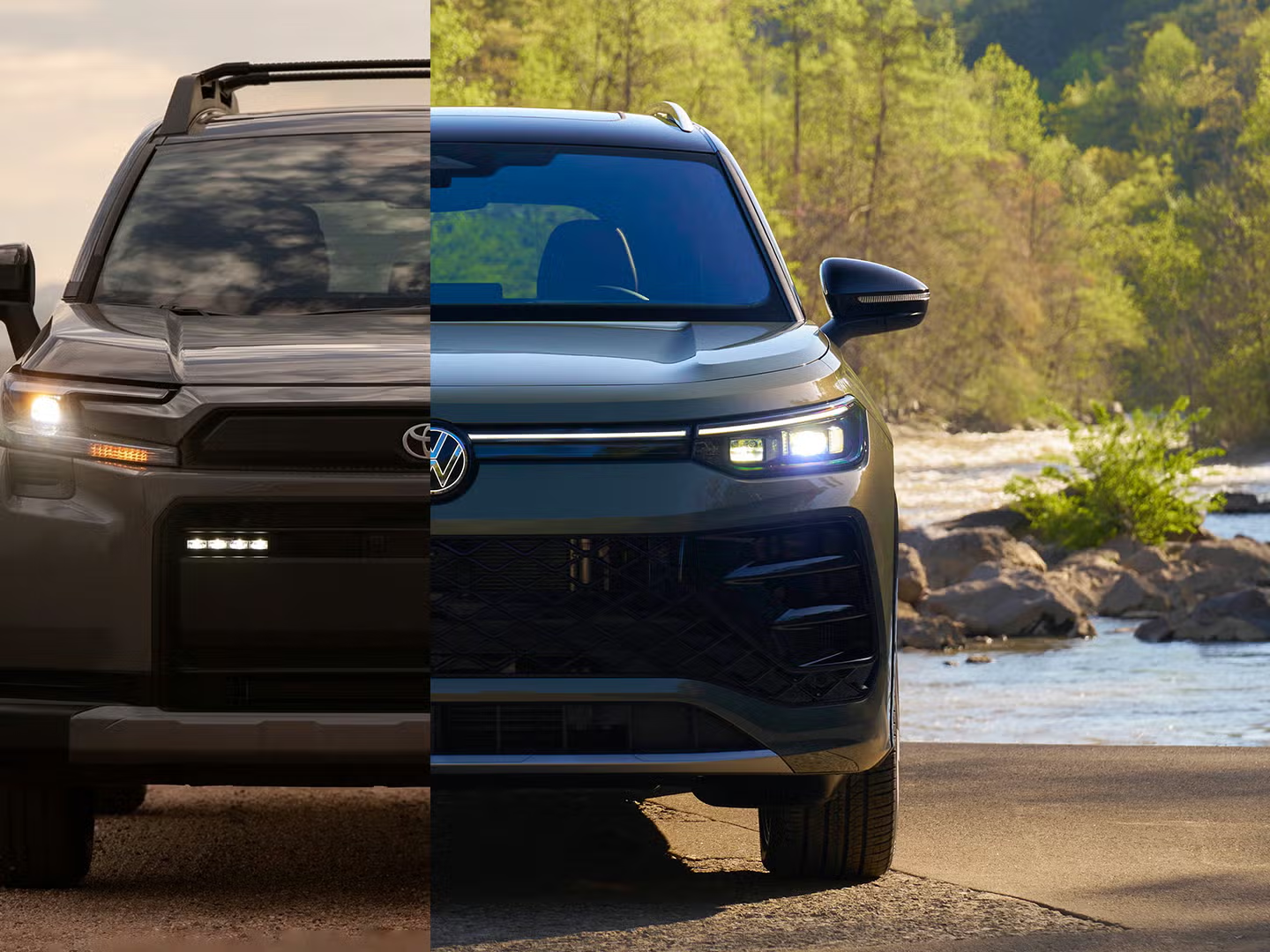
The compact SUV market remains one of the most competitive segments, and two of the most closely watched models for 2026 are the 2026 Toyota RAV4 and 2026 Volkswagen Tiguan. Both offer modern technology, updated styling, strong practicality, and wide buyer appeal — but they take very different approaches in several important areas.
For shoppers comparing these two SUVs, understanding those differences could make the buying decision much easier.
1. Hybrid Efficiency vs Traditional Turbo Power
One of the biggest differences begins with performance and powertrain philosophy.
The 2026 Toyota RAV4 places major emphasis on electrification, with hybrid technology playing a central role. That makes efficiency one of its biggest strengths.
The 2026 Volkswagen Tiguan, meanwhile, focuses more on traditional turbocharged performance.
RAV4 strengths:
- Hybrid-focused efficiency
- Lower fuel costs over time
- Strong everyday drivability
- Potential plug-in options in some trims
Tiguan strengths:
- Traditional turbo performance feel
- Smooth highway power delivery
- Familiar driving experience for gas-engine buyers
This difference alone may shape which SUV makes more sense for many buyers.
2. Fuel Economy Could Be a Major Deciding Factor
Fuel efficiency may be one of the strongest reasons some buyers lean toward the RAV4.
| Category | RAV4 | Tiguan |
|---|---|---|
| Estimated Efficiency | Higher | Lower |
| Long-Term Fuel Savings | Stronger | Moderate |
| Driving Range | Higher | Lower |
For commuters or long-distance drivers, that difference could matter significantly over time.
The Tiguan may still appeal to buyers who prioritize performance feel over fuel economy.
3. Interior Philosophy Is Very Different
The two SUVs take noticeably different approaches inside the cabin.
Toyota RAV4 focuses on:
- Practical layout
- Functional controls
- Rugged styling
- Everyday usability
Volkswagen Tiguan focuses on:
- More premium-feeling materials
- Upscale cabin design
- Larger available displays
- More luxury-inspired atmosphere
This makes the decision partly a matter of taste:
Utility-focused cabin or premium-feeling interior.
4. Passenger Space vs Cargo Utility
This is another major distinction.
The Tiguan may appeal more to buyers prioritizing passenger comfort.
It tends to emphasize:
- Rear-seat comfort
- Passenger room
- Family-friendly cabin space
The RAV4, meanwhile, may appeal more to buyers who prioritize utility:
- Strong cargo practicality
- Flexible storage
- Better gear-hauling usefulness
That makes this comparison especially important for families.
5. Capability and Adventure Use
Capability is where the RAV4 may hold one of its biggest advantages.
Potential strengths include:
- Better towing potential
- More off-road-oriented trims
- Stronger adventure positioning
- Greater appeal for outdoor-focused buyers
The Tiguan tends to be positioned more as a comfort-focused road SUV rather than an off-road-oriented model.
For some buyers, that could be a major difference.
Technology and Safety Comparison
Both models are expected to offer:
- Advanced driver assistance systems
- Large infotainment screens
- Wireless smartphone integration
- Modern safety features
But how those features are packaged may differ by trim.
Toyota may emphasize value and broad feature availability.
Volkswagen may emphasize premium presentation.
Which SUV May Be Better for You?
Choose the RAV4 if you want:
- Better efficiency
- Hybrid technology
- Higher utility
- Stronger towing
- More rugged character
Choose the Tiguan if you want:
- More premium interior feel
- Better passenger comfort
- Traditional turbo driving feel
- European-style design
What Buyers Should Consider Before Choosing
Before deciding, compare:
- Your fuel budget
- How much cargo space you need
- Whether you value hybrid technology
- Whether comfort or capability matters more
- Long-term ownership priorities
These factors may matter more than headline specs.
Final Thoughts
The 2026 Toyota RAV4 and 2026 Volkswagen Tiguan are both strong compact SUVs, but they appeal to slightly different buyers.
The RAV4 appears stronger in efficiency, utility, and capability.
The Tiguan appears stronger in premium feel, comfort, and traditional driving character.
That means the real winner may depend less on which SUV is “better” — and more on which one fits your priorities better.
For many buyers, the decision may come down to a simple trade-off:
Hybrid efficiency and rugged practicality… or premium comfort and turbo performance.